Results volatility is an unavoidable reality in football. Every Sporting Director, Technical Director, Academy Director, Head Coach and football executive will face periods where performances fluctuate, scrutiny increases and stakeholders demand immediate responses.
The challenge is dealing with pressure but also maintaining clarity of direction, protecting the club’s core principles and sustaining organisational performance without exhausting the people responsible for delivering it.
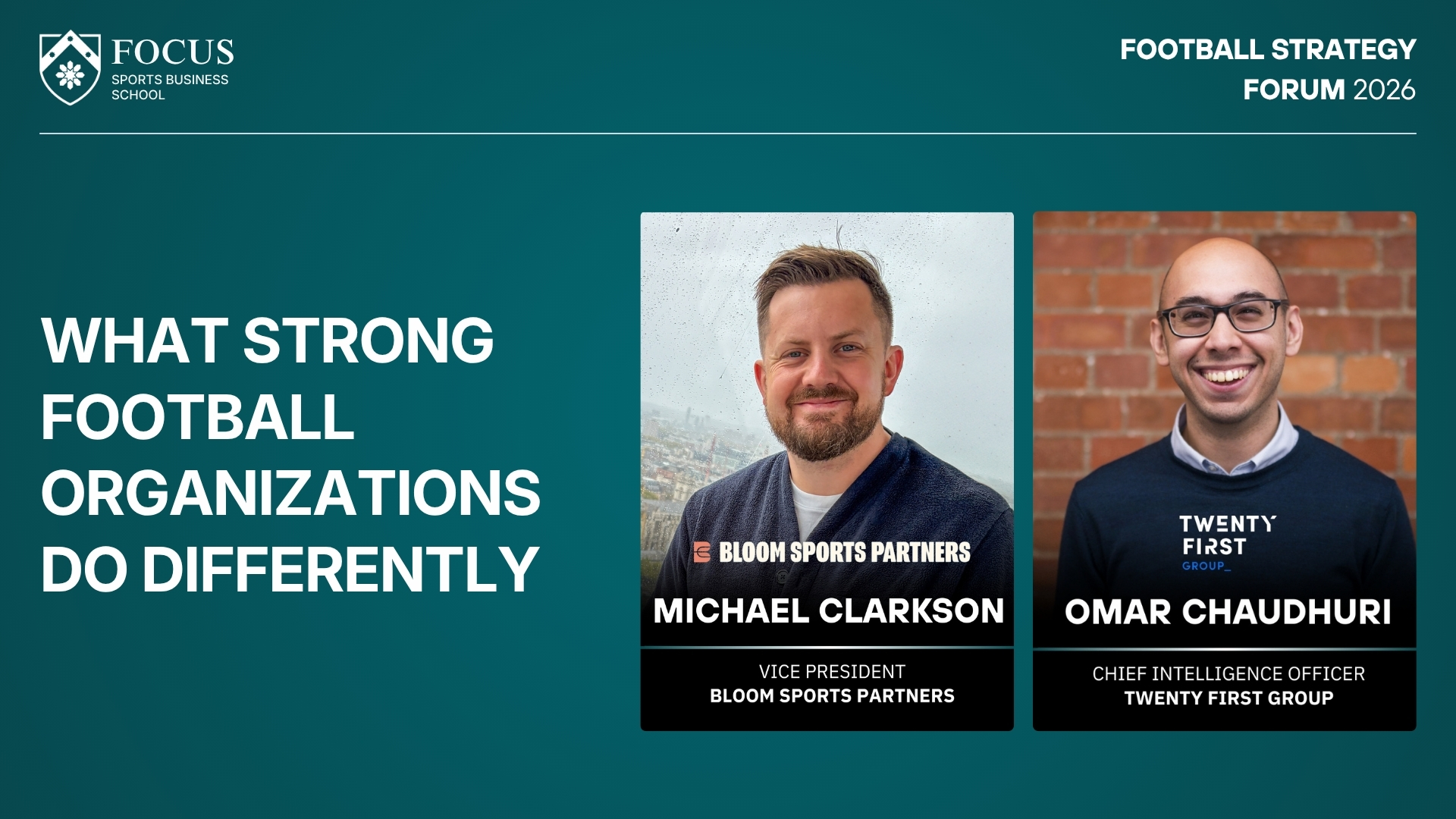
This challenge was at the centre of the Michael Clarkson x Omar Chaudhuri conversation, which examined how football leaders maintain long-term development and organisational clarity under short-term pressure, while protecting core principles when results fluctuate.
The issue extends beyond strategy. It is also an organisational sustainability issue. If a club’s strategy depends on constant heroic effort, unclear ownership structures and an ever-expanding list of priorities, it eventually becomes difficult to sustain. Sustainable performance requires systems, rhythms and decision-making processes that allow individuals and teams to perform consistently over time.
The following framework translates the session’s key themes—culture, communication and decision discipline—into practical leadership considerations for football organisations while also addressing the sustainability of the people responsible for executing the strategy.
Culture: The Stabilising Force During Difficult Periods
Under pressure, organisations tend to revert to established behaviours. Culture therefore becomes a critical mechanism for maintaining stability when results fluctuate.
In football organisations, culture extends beyond values statements and internal messaging. It influences how decisions are made, how standards are maintained, how departments interact and how leaders respond when outcomes fall short of expectations.
This is particularly relevant for Sporting Directors and Academy Directors whose responsibilities include establishing football identity, maintaining alignment across departments and ensuring continuity between the academy and first-team environments.
When strategic objectives remain unchanged but behaviours become inconsistent, culture often becomes the missing link between intention and execution.
Practical Implications
- Protect the club’s football identity and core principles, particularly during periods of external pressure.
- Ensure academy and first-team alignment extends beyond technical methodology to include behaviours, decision-making processes and performance standards.
- View culture as an operational asset that supports resilience and consistency rather than as a morale-building initiative.
Communication: Creating Clarity During Uncertainty
Periods of pressure increase the cost of ambiguity.
When priorities become unclear, organisations often experience duplicated work, conflicting decisions, unnecessary meetings and increased operational friction. Communication therefore serves a practical organisational function beyond stakeholder management or motivation.
Effective communication provides clarity regarding direction, priorities and accountability. It reduces uncertainty and allows individuals to focus their attention on activities that contribute directly to organisational objectives.
This applies across all levels of the football organisation.
Academy staff require clarity regarding development priorities and performance indicators beyond match results. Coaches require a consistent message linking daily activities to longer-term objectives. Executives require communication processes that minimise reactive decision-making and reduce organisational drift.
Practical Implications
- Reaffirm long-term objectives consistently, particularly following disappointing results.
- Reduce priorities rather than adding new initiatives in response to pressure.
- Clarify ownership and accountability across departments to minimise duplication and confusion.
- Ensure communication supports alignment rather than simply increasing information flow.
Decision Discipline: Protecting Long-Term Direction
One of the defining characteristics of effective football leadership is the ability to preserve strategic direction when short-term pressure intensifies.
Many football organisations undermine long-term development through reactive decision-making. A poor sequence of results can lead to abrupt changes in recruitment priorities, player development strategies, pathway structures or succession plans.
Over time, these reactions generate organisational friction. Pathways become less coherent, departmental alignment weakens and recruitment decisions become disconnected from broader strategic objectives.
Decision discipline helps prevent these outcomes by ensuring that short-term challenges do not fundamentally alter long-term direction.
For Sporting Directors, this requires acting as the strategic bridge between football operations and governance structures while protecting the club’s football identity from short-term pressures.
Practical Implications
- Maintain consistency in football philosophy and recruitment principles during difficult periods.
- Protect player development pathways from short-term performance pressures.
- Use moments of pressure to reinforce decision criteria rather than abandon them.
- Review execution and implementation while preserving strategic direction.
Sustainability: Protecting the People Responsible for Delivery
Leadership under pressure is not solely a performance issue. It is also a sustainability issue.
Many organisations respond to pressure by increasing workload, expanding priorities and relying on individuals to compensate for structural weaknesses. While this approach can generate temporary improvements, it often creates fatigue, reduces decision quality and weakens long-term organisational performance.
Sustainable high performance requires recovery, rhythm and clear boundaries. The objective is not to maximise short-term output but to create conditions that allow individuals and teams to perform consistently over extended periods.
For football organisations, this is particularly important because player development, recruitment, succession planning and organisational improvement are inherently long-term activities.
Protecting the people responsible for these processes is therefore a strategic necessity rather than a wellbeing initiative.
Practical Implications
- Avoid using excessive workload as a substitute for organisational clarity.
- Create operating rhythms that support sustained performance.
- Design structures that reduce dependency on constant individual overperformance.
- Recognise burnout as an organisational risk with direct implications for decision quality and execution.
Key Takeaways
- Use culture as a stabilising force when results fluctuate. Consistent behaviours help protect long-term direction during periods of uncertainty.
- Prioritise clarity over volume in communication. Fewer priorities and clearer ownership improve alignment and reduce operational friction.
- Maintain decision discipline under pressure. Short-term challenges should not fundamentally alter core principles or strategic direction.
- Build systematic player pathways and transition processes. Structured progression reduces organisational bottlenecks and supports long-term development.
- Treat organisational sustainability as a strategic issue. Sustained performance depends on protecting the people responsible for delivering the strategy.
The ability to maintain direction under pressure is a defining capability of effective football leadership. It requires more than resilience. It requires organisational clarity, disciplined decision-making, aligned communication and structures that allow people to perform consistently over time.
These themes are examined throughout the FOCUS MBA in Football Strategy and Leadership, where participants explore how football organisations design structures, build alignment and sustain performance in complex and high-pressure environments.
Learn more about the programme: