
Architecture and Asset Realization in Modern Football Operations
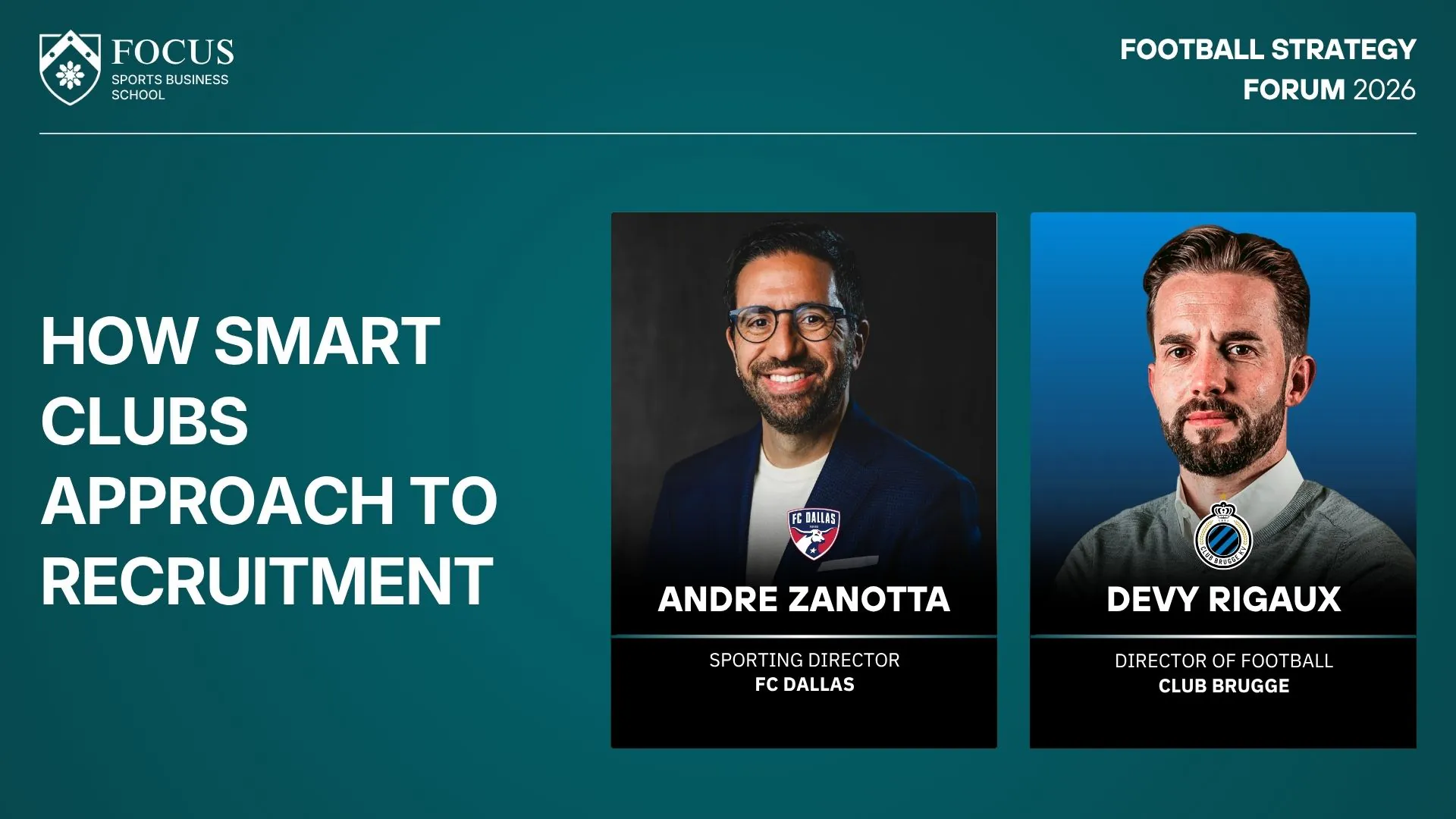
In this episode, Devy Rigaux and André Zanotta explore how Club Brugge and FC Dallas build sustainable squads through disciplined recruitment, transfers, and long-term planning.
1. The New Paradigm of the Development Club
The contemporary footballing landscape is undergoing a fundamental shift where the most successful organizations are no longer defined by gross expenditure, but by the precision of their asset management. Football Strategy Forum 2026 panel featuring Dévy Rigaux (Club Brugge) and André Zanotta (FC Dallas) served as an executive masterclass in this evolution, reframing the elite club as a “profitable company” where sporting success and financial sustainability are inextricably linked. For clubs operating outside the “Big Five” leagues, the strategic directive is clear: institutional success is a product of structural stability, rigorous asset categorization, and a staunchly “club-driven” philosophy. As Dévy articulated, the Brugge model is predicated on a three-pillar framework: “Embodying our values, winning consistently, and maintaining profitability.” This ethos suggests that on-pitch performance is the visible output of a sophisticated, behind-the-scenes value-creation engine.
2. The Stability Paradox: Executive Longevity vs. Coach Transience
In a global market where transfer intelligence and activity now occur year-round, the ability to execute rapid, high-stakes decisions is a primary competitive advantage. This agility is not a product of impulse but of institutional longevity. At Club Brugge, the ownership has remained constant since 2011, with the CEO and sporting management maintaining tenures exceeding a decade. This executive continuity creates “short lines” of communication, providing a strategic agility advantage that allows the club to secure talent and finalize divestments well outside the traditional volatility of transfer windows.
This “Club-driven” model stands in sharp contrast to the “Coach-driven” paradigms prevalent in volatile markets like Brazil. In coach-driven systems, recruitment frequently services the transient tactical preferences of a manager whose tenure may not last a single season, leading to systemic “Recruitment Beta” and significant capital inefficiency. By maintaining an institutional grip on the sporting direction, clubs insulate their balance sheets from the inherent transience of the dugout, ensuring that every signing serves a long-term commercial and technical roadmap.
3. Roster Segmentation and the 24-36 Month Liquidity Window
To optimize the balance between immediate sporting results and long-term financial health, elite organizations must move beyond a monolithic view of the squad. Instead, assets are categorized to manage risk and maximize “value signaling” in the market. Club Brugge utilizes a precise four-tier segmentation:
- Performance Players: The veteran backbone. Established assets tasked with immediate results and cultural stewardship.
- High Potentials: Key assets in the active “selling cycle.” These players provide immediate starting XI impact while building exponential market value.
- Young Potentials: Early-stage acquisitions or academy graduates representing the next wave of capital appreciation.
- Next Potentials: High-ceiling prospects within the second team or academy pathway.
The 24-36 Month Liquidity Window For “High Potentials,” the club operates on a strict realization clock. The objective is to facilitate a transfer within a 24-to-36-month window. Dévy cited Igor Thiago and Ardon Jashari as primary examples of accelerated value realization, with both players moved within 12 months once their market value peaked. Conversely, Noa Lang remained for three seasons, as the club refused to divest until a market offer aligned with their internal valuation. The risk of over-holding is stagnation; a player who misses their liquidity window risks transitioning into a “Performance Player”—maintaining utility but losing the resale premium required to fuel the club’s reinvestment cycle.
4. Playing Style as an Asset-Appreciation Engine
A characterizing playing style is not merely a tactical choice; it is a mechanism for “optimizing marketability.” By defining a rigorous “game concept,” clubs create a lower-risk environment for new signings, ensuring they are recruited for specific, non-negotiable tasks.
The 8-Principle Framework Club Brugge’s recruitment and coaching are governed by an 8-Principle Model: three principles in possession, three out of possession, and two general principles. This serves as the ultimate KPI for both player and coach recruitment. For instance, when scouting wingers like Antonio Nusa, the club utilizes “Task-Oriented” scouting, prioritizing two essential attributes: dribbling and crossing. By recruiting for these specific traits, the club ensures the player thrives within the system, thereby maximizing their value in the global market.
To mitigate the risk of tactical drift, both FC Dallas and Club Brugge prioritize the internal promotion of coaches—such as Eric Quill—who have been steeped in the academy’s tactical methodology. This ensures that the playing style remains a constant, even when the head coach changes, protecting the value of the players currently in the pipeline.
5. Managing the Human Variable: Capital Loss Mitigation
Despite sophisticated data modeling, the “human variable” remains the most volatile element of recruitment. Socio-cultural friction and non-sporting variables can undermine even the most statistically sound transfer. André Zanotta provided a sobering case study in adaptation risk with the acquisition of Lucho Acosta from Cincinnati. Despite his proven quality, personal issues and environmental misalignment rendered him a poor fit for the club’s specific context.
In such scenarios, the executive role shifts from asset appreciation to capital loss mitigation. Recognizing the “failed fit” early, FC Dallas acted with decisive speed, transferring Acosta to Fluminense after only six months. This rapid divestment prevented a total collapse in the asset’s value and allowed the organization to pivot its resources back to more viable targets, proving that the ability to exit a position is as critical as the entry.
6. The Blueprint for the Sustainable Elite
The insights from the Football Strategy Forum 2026 confirm that the most successful mid-market entities—be they Club Brugge, FC Dallas, or the benchmark of consistency, Bodo/Glimt—are defined by total alignment between shareholders, the board, and sporting management. Bodo/Glimt’s eight-year coaching tenure and unwavering tactical identity serve as the ultimate proof-of-concept for the “Architected Club.”
By treating the football club as a disciplined asset-management engine, these organizations have successfully decoupled their long-term survival from short-term pitch volatility. The Football Strategy Forum 2026 remains the premier venue for distilling these high-value executive strategies, providing the blueprint for clubs striving to achieve elite status through institutional rigor rather than unsustainable spending.
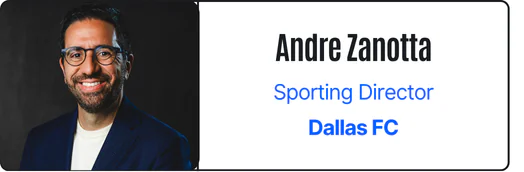
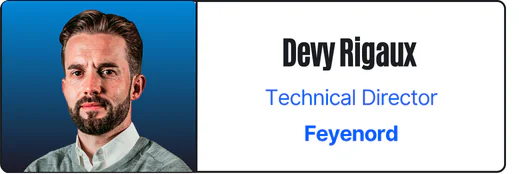
You’ll learn from
Go deeper with a course
Sharpen your leadership skills to deliver impact in your current role while preparing for future responsibility.
Share with your network