A professional football career eventually ends. The next career does not need to start from zero.
Players leave the game with years of experience inside high-performance environments. They understand dressing rooms, coaches, pressure, competition and the daily reality of professional football. But moving from playing into management or leadership requires a different understanding of the game.
At FOCUS, we have seen this directly. Professional players including Oguchi Onyewu, Alfred Finnbogason, Dani Weatherholt and Arin Wright have joined our programmes at different stages of their careers. Their situations are different, but they point to the same important question: how can professional players prepare properly for a career after football?
Playing Football and Leading a Football Organisation Are Different Jobs
A long playing career provides knowledge that is difficult to teach.
Players understand how decisions affect a dressing room. They have experienced different coaches, leadership styles and club cultures. They know what good communication looks like from the receiving end and what happens when communication breaks down.
This experience can become a major advantage in a second career in football.
But it is only one perspective.
A Sporting Director, Technical Director or football executive has to understand why decisions are made in the first place. That can mean building a squad within financial limits, defining a recruitment strategy, managing contracts, working with ownership, developing an academy pathway or deciding how the club should operate over several seasons.
The player experiences the football organisation.
The leader has to understand and manage the system behind it.
That is the gap players need to close if they want to move successfully into football leadership.
The Transition Should Start Before Retirement
One of the most important lessons from working with professional players at FOCUS is that career transition does not need to begin after the final match.
It can start years earlier.
This does not mean a player needs to decide at 28 that they want to become a Sporting Director at 35. The first objective is simpler: understand the possibilities.
What roles exist inside a modern football organisation? What does a Sporting Director actually do every week? How is that different from a Technical Director, Head of Recruitment, General Manager or Academy Director? Which responsibilities fit the player’s experience, interests and strengths?
Answering these questions early gives players time to explore rather than react.
It also allows them to build knowledge while they still have something extremely valuable: direct access to the professional game.
Arin Wright: Understanding Football From the Other Side
Arin Wright is a good example.
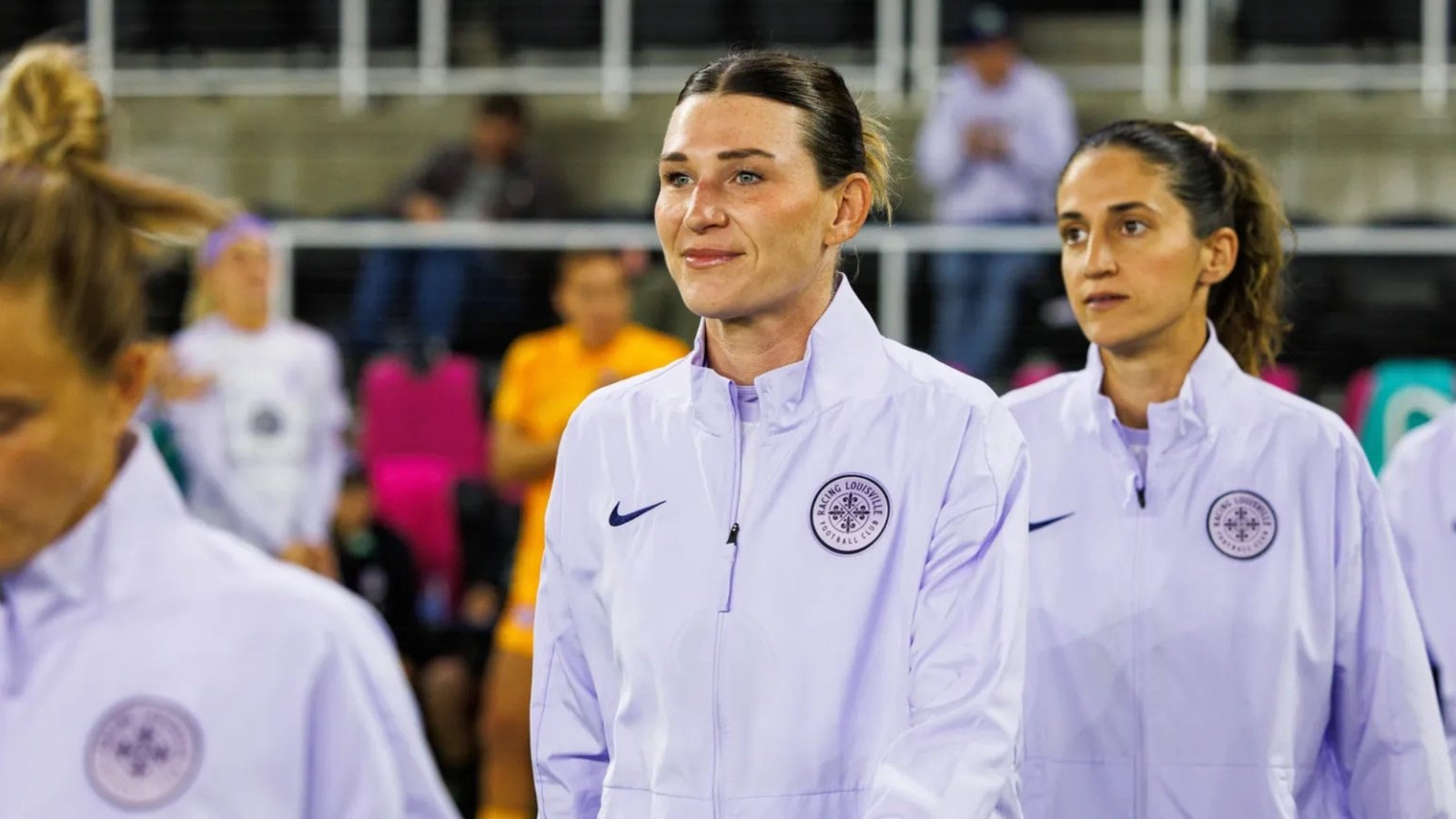
The Racing Louisville FC captain joins the Professional Diploma in Women’s Football Directorship while still competing professionally in the NWSL.
Her interest in leadership did not suddenly appear because retirement was approaching. It developed through her experience within professional football.
Alongside her playing career, Arin has been involved with the NWSL Players Association, helped write the league’s first Collective Bargaining Agreement and served on its board.
That experience exposed her to questions beyond performance on the pitch.
How does the relationship between a club and a league work? How do owners influence the direction of clubs? How are clubs funded and managed year after year? How should player pathways develop as a league grows?
Her next step is therefore not simply to collect another qualification. It is to understand these questions from the organisational side and identify where her own experience could be most useful after playing.
That distinction matters.
Career preparation should not start with the question, “What qualification should I get?”
It should start with, “Where could I create value after playing, and what do I still need to learn to operate there?”
There Is No Single Career After Football
The examples we have seen across FOCUS also show why career transition should not be treated as one standard pathway.
Oguchi Onyewu came into executive education with a career that had already exposed him to football at the highest international and club levels. Alfred Finnbogason brought a different playing journey and perspective. Dani Weatherholt joined our Women’s Football Directorship programme while continuing her professional career in the NWSL, using the programme to develop her understanding of club operations, recruitment, player development and the business behind the game.
Arin Wright now enters with another set of experiences, including player representation and collective bargaining.
The important point is not that professional players should all become Sporting Directors.
They should not.
Some will be suited to coaching. Others may move into recruitment, player development, football operations, administration, commercial leadership, representation or entrepreneurship. Some may eventually discover that their strongest opportunities sit outside football altogether.
Good career transition is partly about discovering where not to go.
Education can help players understand the options before committing to one of them.
Playing Experience Needs to Be Translated
There is another challenge that is often underestimated.
Professional playing experience is valuable, but players need to learn how to translate it.
A player may have spent 15 years inside elite teams without ever managing a department, building a budget, presenting a strategy to ownership or evaluating an organisation from a management perspective.
The skills are related, but they are not identical.
Leadership in a dressing room can provide a foundation for managing people. Experiencing different club cultures can develop a strong instinct for organisational dynamics. Working under different coaches can create an understanding of communication and performance environments.
But moving into an executive position requires those experiences to become more structured.
Why did one environment work better than another?
Why did one recruitment strategy produce a balanced squad while another created problems?
How did a change in ownership affect sporting decisions?
Why were some young players successfully integrated while others were not?
What looked like a football decision from the dressing room may have been a financial, contractual or organisational decision when viewed from the boardroom.
Learning to see those connections is part of the transition from player to leader.
Build Knowledge Before You Need the Job
There is also a practical advantage to starting early.
The period immediately after retirement is not the ideal moment to begin building an entirely new professional identity.
Players who explore their next career while still playing can gradually build relationships outside their immediate team, understand different parts of the industry and test their interests without the pressure of needing a job immediately.
They can speak with Sporting Directors.
They can understand how recruitment departments operate.
They can learn about finance, strategy, governance and transfers.
They can study how football organisations outside their own league or country work.
Most importantly, they can begin separating what they know as a player from what they still need to learn as a professional working on the other side of the organisation.
That creates a much stronger starting point when the playing career eventually ends.
A Second Career Should Build on the First
Professional football gives players an unusual education.
For years, they operate inside organisations where performance is measured constantly, decisions carry immediate consequences and people from very different backgrounds have to work toward the same objective.
That experience should not be underestimated.
But neither should it be assumed that playing automatically prepares someone to lead a football organisation.
The strongest transition happens when playing experience is combined with new knowledge, wider perspectives and a clear understanding of where that experience can create value.
That is why seeing players such as Oguchi Onyewu, Alfred Finnbogason, Dani Weatherholt and now Arin Wright enter executive education is important.
They are not starting another career from zero.
They are learning how to use the first one differently.
At FOCUS Sports Business School, our programmes in Sporting Directorship, Football Strategy & Leadership and Women’s Football Directorship provide professional players and football practitioners with the opportunity to understand the game from a wider organisational perspective and prepare deliberately for greater responsibility within football.