The landscape of women’s football is undergoing a rapid transition from a “developmental project” to a sophisticated, globalized professional industry.
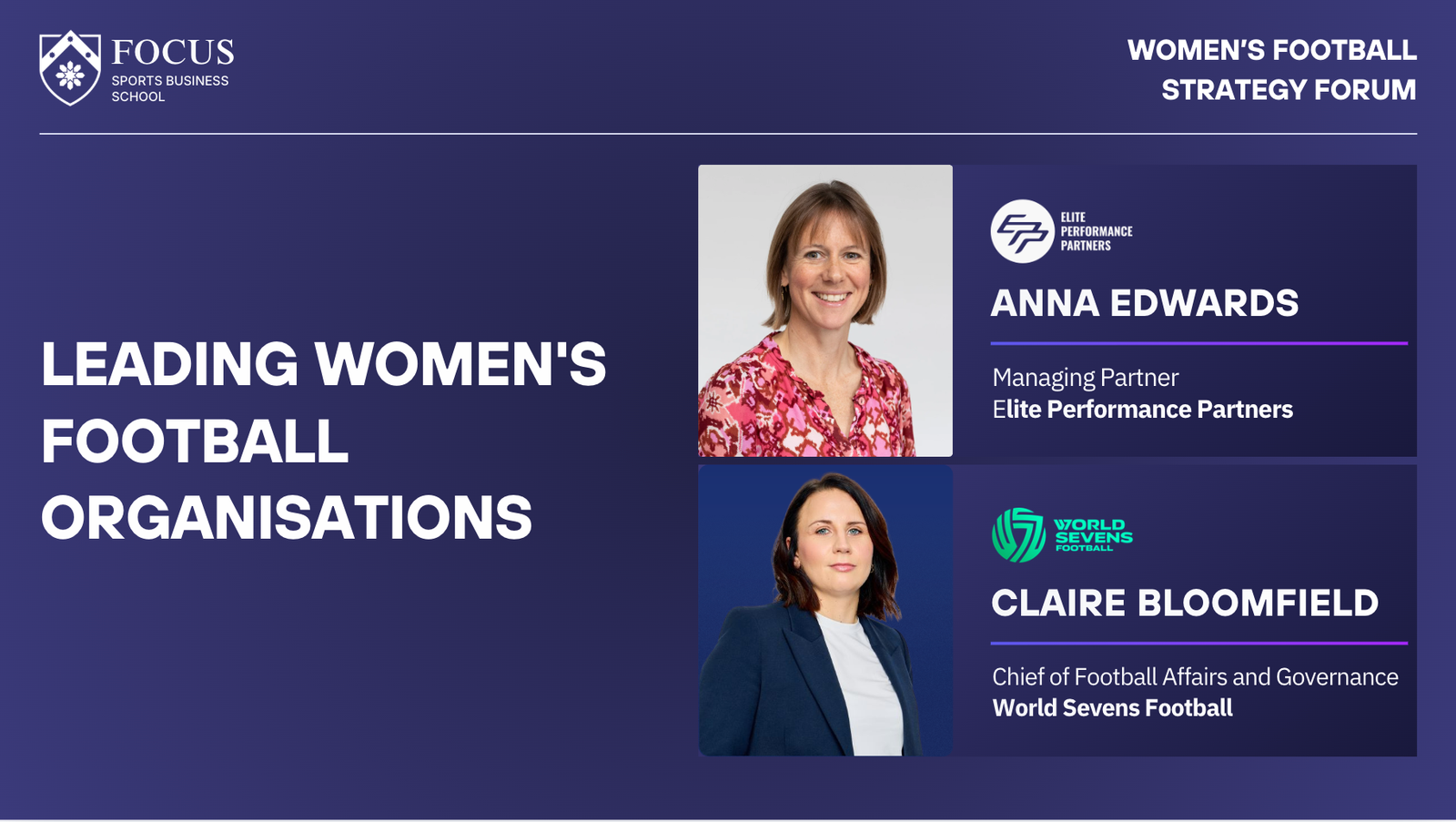
Here are some insights from industry experts Anna (Elite Performance Partners) and Claire Bloomfield (World Sevens Football) conversation in the Women’s Football Strategy Forum, focusing on the critical need for specialized governance, the distinction between figurehead and operational leadership, and the cultural shifts required to sustain the sport’s commercial trajectory.
Critical Takeaways:
- Operational Maturity: Organizations must move away from generalist “one-person” structures toward specialized roles (CEOs vs. Sporting Directors) to manage increasing operational complexity.
- Leadership Dynamics: Female-led leadership teams foster environments with less ego, more decisive action, and a shared mission that accelerates progress.
- Strategic Identity: The women’s game must define itself on its own terms rather than positioning itself as “not the men’s game,” while selectively adopting commercial “best practices” from global models like the US.
- Accountability and Media: There is a growing need for investigative, political-level journalism to hold governing bodies accountable to their strategic commitments.
1. Leadership Models and Talent Management
The evolution of women’s football requires a more nuanced approach to recruitment and organizational design. A recurring failure in the current environment is the inability to distinguish between different types of leadership needs.
Figureheads vs. Operators
A primary mistake in women’s football leadership is the tendency to appoint “figureheads”—credible faces for commercial visibility—without ensuring they have the support of “operators” who understand the functional machinery of the business.
- Figureheads: Essential for brand building, commercial narrative, and public visibility.
- Operators: Vital for running the business, managing regulatory changes, and executing strategic ambition.
- The “Generalist” Trap: Many clubs still employ one person to manage everything from kit logistics to player signings. At elite levels, this generalist model is obsolete.
Experience vs. Expertise
The talent pool for women’s football is relatively small, leading to a debate between hiring for “experience” (context within the women’s game) versus “expertise” (technical skill often gained elsewhere).
- Contextual Experience: Necessary to understand the unique landscape, history, and barriers of the women’s game.
- Technical Expertise: Often required for rapid commercialization or high-performance shifts where the women’s game is still immature.
- The “Male Game” Proxy: Organizations often “load” the women’s game with individuals who have run men’s football. While the work gets done, it often lacks the specific strategic mindset required for the unique challenges of the women’s sport.
2. Cultural Dynamics and “Positive Disruption”
The history of women’s football is defined by “trailblazers” who have had to challenge existing structures. This has created a specific cultural profile for senior female leaders.
Reframing Behavioral Perceptions
Women who have “fought the good fight” to establish the game often face gendered criticism.
- Gendered Language: Terms like “bossy,” “difficult,” or “agitator” are frequently applied to women who ruffle feathers, whereas their male counterparts might be seen as decisive or strong.
- Positive Disruption: Leaders should be viewed as “positive disruptors” who provide creative challenge. Those who have not “ruffled feathers” are often perceived as not having been fully engaged in the game’s difficult journey.
The Impact of Female-Led Teams
Organizations like World Sevens benefit from all-female leadership teams, which change the dynamic of strategic conversations:
- Shared Mission: Conversations start from a baseline of high investment and infectious passion.
- Reduced Ego: A focus on frank, honest dialogue rather than navigating internal politics.
- Collective Resilience: A culture where members are willing to “run through walls” for one another, facilitating rapid progress (e.g., launching global tournaments within a year).
3. Organizational Structure and Globalization
As women’s football globalizes, the rate of change is outpacing many existing organizational structures, which remain geared toward domestic operation.
The Scale-Up Challenge
Many women’s football entities operate like “startups” or “scale-ups.”
- Resourcefulness vs. Resources: A lack of financial resource often leads to high resourcefulness, where staff “cross lanes” and take on multiple responsibilities.
- Growth Friction: Rapid injections of capital and sudden growth cause confusion unless job roles are clearly defined.
- Global Readiness: Organizations not structured to navigate a complex international landscape (e.g., stakeholder relations across borders, global regulatory changes) are increasingly unprepared.
Key Leadership Distinctions
| Category | Traditional/Immature Model | Modern/Elite Model |
| Organizational Status | Viewed as a “Developmental Project” | Viewed as a “Competitive Industry” |
| Staffing | Generalists (One person handles all) | Specialists (Separation of CEO/Sporting Director) |
| Strategy | “Copy and Paste” from Men’s Game | Purpose-built, data-driven strategies |
| Decision Making | Based on “doing the right thing” | Based on strategic ambition and data |
4. Infrastructure and Commercial Strategy
The US model—specifically the NWSL—provides a reference point for the intersection of sport and entertainment, though it also presents unique challenges.
Purpose-Built Infrastructure
There is a growing movement toward dedicated facilities for women’s teams.
- The Kansas City Current Model: Noted for using female architects and building training facilities/stadiums that reflect the club’s specific values.
- Commercial Drivers: Purpose-built stadiums allow for “fan-fest” experiences and concessions tailored to the specific audience, which is critical for revenue.
- The Brighton Example: In the UK, clubs are beginning to follow suit with data-driven decisions to build dedicated women’s stadiums.
The Calendar Debate
The alignment of the international match calendar is a source of “tremendous complexity.”
- NWSL Calendar: Discussion surrounds whether the US should switch to a European-style calendar. Proponents argue for global alignment; opponents cite the “competitive advantage” of the current summer schedule and the impact of extreme weather on attendances during winter months.
- Stakeholder Balance: Decisions on the calendar must involve medical and performance experts to manage “player loads,” not just commercial strategists.
5. Accountability and the Role of Media
For the game to mature, it requires higher levels of external scrutiny and internal accountability.
- Investigative Journalism: While coverage is increasing, the “press pack” is young. There is a need for more “investigative, political stories” to hold governing bodies and competition organizers to account.
- Strategy Delivery: The media must move beyond “cheerleading” to challenge whether organizations are actually delivering on their published strategies or merely performing “publicity stunts.”
- Internal Check and Challenge: Boards need a “diversity of thought” to ensure decisions are not made in a vacuum. The most important conversations often happen “outside of the room” to provide the necessary “check and challenge” to senior leaders.
6. Defining the Future
The next three to five years will separate well-led organizations from those that falter. Success will be determined by:
- Empowerment: Hiring experts who know more than the leaders themselves and giving them the platform to advise.
- Bravery: Being willing to take a “new path” and being brave enough to switch back if a decision (like a calendar change) proves incorrect.
- Positive Definition: Moving away from defining women’s football by what it is not (not the men’s game) and instead leaning into what it is—a unique blend of elite performance and modern entertainment.
Watch the Full Conversation
This piece highlights key insights from the Women’s Football Strategy Forum.
Register for free to watch the full session with Anna Edwards and Claire Bloomfield, alongside all other Forum recordings.
Register and watch: https://focus.disco.co/p/women-s-football-strategy-forum-2026/register